





Oxygen

O2 CAS Number 7782-44-7 UN1072 (gas)

Oxygen

O2|CAS Number 7782-44-7|UN1072 (gas)

Gas volume

Calculating the volume or mass of a given amount of gas

At the boiling point (1atm | 90.19k) Equal to: -182.96 C° || -297.33 F°

Gas phase

(at STP conditions)

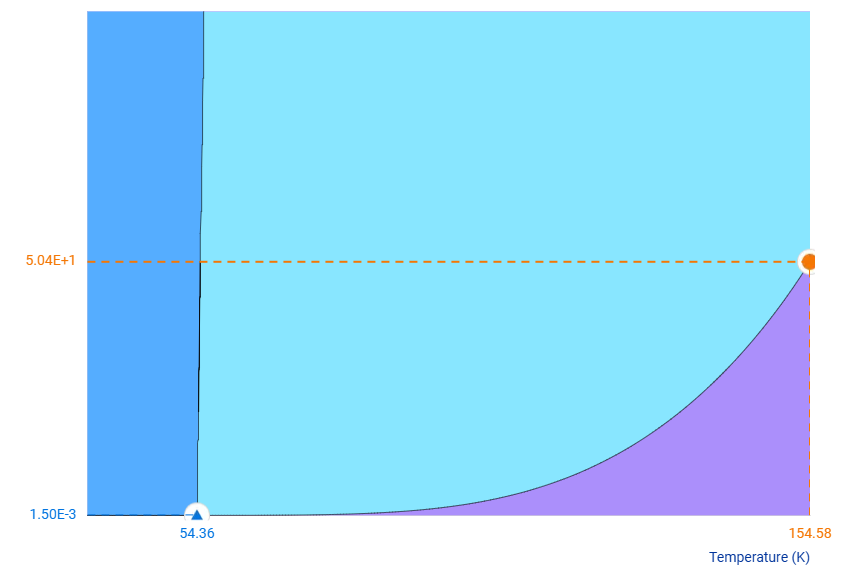
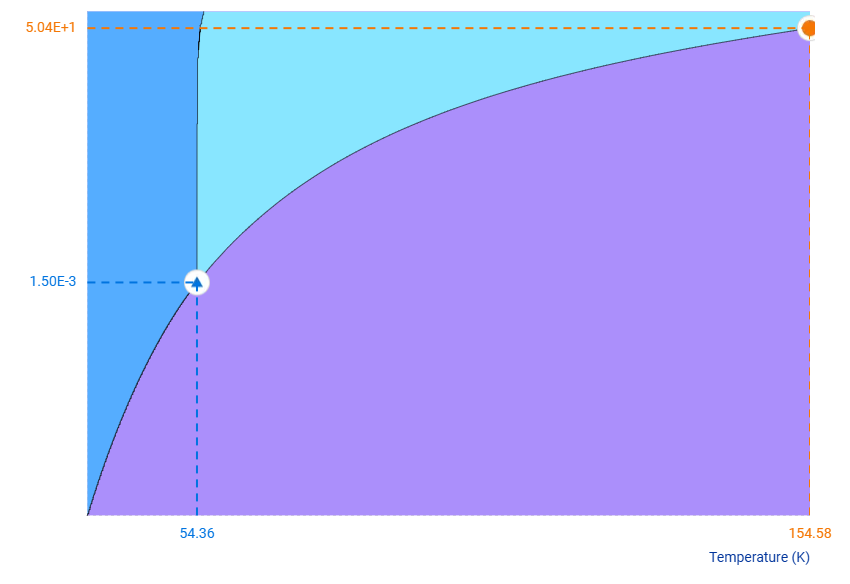
The phase diagram of a molecule shows the transition between solid, liquid, and gas phases as a function of temperature and pressure.

Solid phase    Liquid phase    Vapor phase    Critical point    Triple point
Molar mass: 17.030 g/mol
Percentage of presence in dry air/
Critical point Temperature: 132.50 °C Pressure:
112.8 bar
Density:
235.00 kg/m³
Triple point Temperature: -77.66 °C
Pressure:
6.1111E-2 bar

Pressure equal to 1.013 bar

9.9935E-1 Z compressibility coefficient
1.3967 Ratio Cp/Cv
1.3085 kg/m³ Gas density
872.14 vol/vol Gas/liquid equivalent (at boiling point)
9.1962E kJ/(kg·K) Heat capacity Cp
6.5846E kJ/(kg·K) Heat capacity Cv
2.293E-5 mol/mol Solubility in water
1.11 Specific gravity
7.643E m³/kg Special volume
26.34 mW/(m·K) Thermal conductivity
2.055E-4 Po Viscosity
9.9924E-1 Z compressibility coefficient
1.3977 Cp/Cv ratio
1.354 kg/m³ Gas density
843.57 vol/vol Gas/liquid equivalent (at boiling point)
9.1822E kJ/(kg·K) Heat capacity Cp
6.5702E kJ/(kg·K) Heat capacity Cv
2.756E-5 mol/mol Solubility in water
1.11 Special price
7.385E-1 m³/kg Special volume
25.55 mW/(m·K) Thermal conductivity
1.9993E-4 Po Viscosity
9.9903E-1 Z compressibility coefficient
1.3991 Cp/Cv ratio (gamma)
4.466 kg/m³ Gas density (at boiling point)
1.4287 kg/m³ Gas density
798.77 vol/vol Gas/liquid equivalent (at boiling point)
9.1672E-1 kJ/(kg·K) Heat capacity Cp
6.5521E-1 kJ/(kg·K) Heat capacity Cv
1.11 Special price
0.7 m³/kg Special volume
24.35 mW/(m·K) Thermal conductivity
1.9143E-4 Po Viscosity

GHS03

Oxidising

GHS04

Gas under pressure

Safety:

Although oxygen itself is not flammable, it is a strong oxidizer and can greatly increase the risk of fire or explosion. Adhering to the following safety measures is essential when handling this gas:

  • Strong Oxidizer: Oxygen accelerates and intensifies the combustion of materials. Avoid direct contact with combustible materials such as oil, grease, fats, fabrics, wood, and various solvents.
  • High Pressure: Oxygen is stored under high pressure in cylinders. It is essential to use appropriate equipment such as regulators, hoses, and connections designed specifically for oxygen.
    Avoid dropping, striking, or heating cylinders.
  • Proper Ventilation: In areas where oxygen is used, effective ventilation is essential to prevent gas accumulation and reduce the risk of combustion.
  • Clean Equipment: All equipment used (e.g., masks, tubes, regulators, etc.) must be clean, dry, and free from any oils or greases, as these substances can lead to combustion or explosion when in contact with oxygen.
  • No Smoking: Smoking or creating sparks near oxygen equipment is strictly prohibited.
  • Personnel Training: Individuals working with oxygen should undergo specialized training in gas handling, safety protocols, hazard identification, and proper equipment use.
  • Leak Detection: In environments where oxygen leakage is possible, it is advisable to use leak detection sensors to prevent potential hazards.
Material Compatibility with Oxygen:

For safety, all components of the oxygen transfer and usage system should be compatible with this gas:

  • Compatible Materials: Many metals such as stainless steel, copper, and brass are compatible with dry oxygen at normal pressure. However, at high pressures or in the presence of moisture, the risk of reactions increases, and material selection must be done carefully.
  • Incompatible Materials: Organic compounds like oils, greases, plastics, ordinary rubbers, and many types of adhesives are incompatible with oxygen. Under certain conditions, these materials can lead to dangerous reactions.
  • Piping and Fittings: All pipes, fittings, and valves must be made from oxygen-resistant materials and should be thoroughly cleaned before use to remove any contaminants (especially oils or dust).
Medical Applications:
  • In the medical field, using approved and specialized oxygen equipment is essential. These devices must be designed and constructed according to international standards to ensure safety and functionality.

By following these strict guidelines, the risks associated with oxygen use, particularly in environments such as healthcare, industrial settings, and laboratories, can be minimized, ensuring safe and effective operations.

Role in Biological Processes:
  • Cellular Respiration: Gaseous oxygen acts as the final electron acceptor in the respiratory chain of all aerobic organisms (humans, animals, plants, and some microorganisms). Without O₂, ATP production and cellular energy supply would not be possible.
  • Oxygen Delivery System: Oxygen gas is absorbed through the lungs and transferred to the bloodstream to provide energy to all cells, ensuring proper metabolic function and energy production.
Biological processes
Medical Applications:
  • Oxygen Therapy: Prescribing pure or concentrated oxygen for patients with respiratory conditions such as COPD, pneumonia, asthma, or post-surgery is essential. This method increases blood oxygen levels, reduces fatigue, and enhances survival chances.
  • Hyperbaric Oxygen Therapy (HBOT): In a high-pressure chamber, patients breathe in more than 99% oxygen. This method is effective for chronic wounds, CO poisoning, and certain medical conditions.
  • Anesthesia and Resuscitation Support: In the operating room and intensive care units, oxygen is critical for maintaining adequate tissue oxygen levels during anesthesia and resuscitation.
Medical application
Industrial Applications:
  • Steel Production and Metal Industries: In processes like Basic Oxygen Steelmaking, gaseous oxygen is used to remove impurities (such as carbon, sulfur, and phosphorus) and raise the reaction temperature during metal refinement and melting.
  • Cutting and Welding (Oxy-fuel): The combination of O₂ with gases like acetylene or propane creates a high-temperature flame suitable for welding and cutting metals. It is also applied in flame-hardening or flame-cleaning processes.
  • Chemical Industries: Gaseous oxygen facilitates oxidation reactions such as the production of ethylene oxide, propylene oxide, nitric acid, and paper bleaches.
  • Water and Wastewater Treatment: Oxygen transfer to aerobic microorganisms improves the breakdown of organic materials in wastewater treatment plants.
  • Glass, Ceramics, and Pottery: The use of oxygen-fueled torches enhances energy efficiency and improves the final product quality in these industries.
  • Paper and Pulp Industry: Oxygen oxidation serves as a cleaner alternative to traditional chemical bleaching processes in paper production.
  • Oil and Gas / Biomass / Gasification: Oxygen is used for fuel gasification and to enhance combustion efficiency in power plants or hydrocarbon refinement processes.
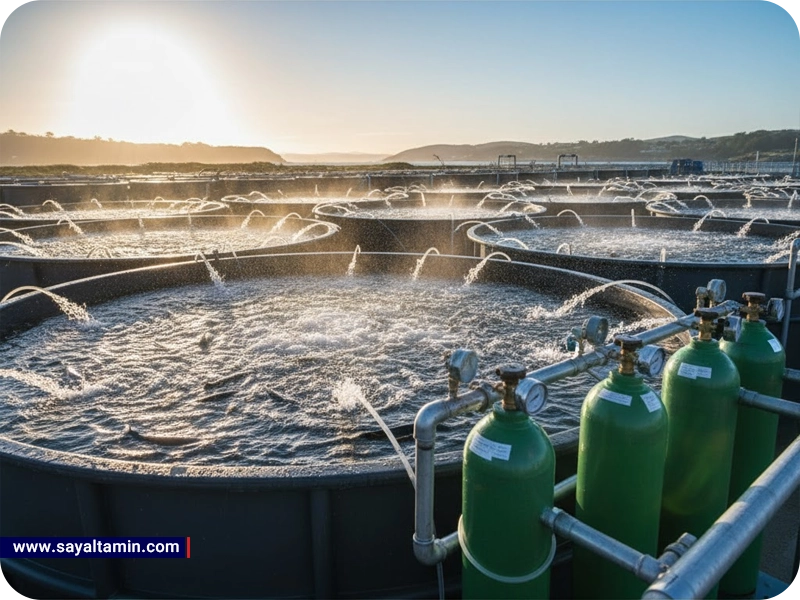
  • Aquaculture: Adding O₂ to water increases dissolved oxygen levels, improving productivity in fish farming and aquaculture.
  • Aerospace and Aviation: Oxygen is used in aircraft and spacecraft to support breathing at high altitudes, ensuring proper oxygen levels for crew members and passengers.
  • Ozone Production: Gaseous oxygen serves as the source for ozone (O₃) production, which is used for disinfection and air and water purification.

These diverse applications underscore the critical role of oxygen in both biological and industrial processes, highlighting its versatility and importance across various fields.

Industrial application
Role in biological processes:

. Cellular Respiration: In all aerobic organisms (humans, animals, plants, and some microorganisms), gaseous oxygen acts as the final electron acceptor in the respiratory chain. Without O₂, ATP production and cellular energy supply would not be possible.

Oxygenation system: Oxygen gas is absorbed through the lungs and transported to the blood so that all cells receive sufficient energy.

Biological processes
Medical application:

. Oxygen Therapy: Administering pure or concentrated oxygen is essential for patients with respiratory conditions such as COPD, pneumonia, asthma, or after surgery. This procedure increases blood oxygen levels, reduces fatigue, and increases the chance of survival.

Hyperbaric Oxygen Therapy: In a hyperbaric chamber, the patient breathes more than 99% oxygen. This method is effective for chronic wounds, CO poisoning, and certain diseases.

Support in anesthesia and resuscitation: In the operating room and intensive care, oxygen is used to maintain adequate tissue oxygen levels.

Medical application
Industrial application:

Steelmaking and Metal Industries: In metal smelting and refining processes such as Basic Oxygen Steelmaking, gaseous oxygen is used to remove impurities (carbon, sulfur, phosphorus) and increase the reaction temperature.

Oxy-fuel cutting and welding: Combining O₂ with gases such as acetylene or propane creates a high-temperature flame suitable for welding and cutting metals. It is also used in processes such as flame-hardening or flame-cleaning.

Chemical industry: Oxygen gas facilitates oxidation reactions such as the production of ethylene oxide, propylene oxide, nitric acid, and paper bleaches.

Water and wastewater treatment: Transferring oxygen to aerobic microorganisms improves the decomposition of organic matter in treatment plants.

Glass, pottery, and earthenware: Using oxy-fuel burners increases energy efficiency and the quality of the final product.

Pulp and paper industry: Oxygen oxidation is a cleaner alternative to conventional chemical bleaching processes.

Oil and Gas Industries / Biomass / Gasification: Oxygen is used to gasify fuels and increase combustion efficiency in power plants or hydrocarbon refining.

Aquaculture: Adding O₂ to water improves dissolved oxygen and increases productivity in aquaculture.

Space and aviation: In aircraft and spacecraft, oxygen is used to support breathing at high altitudes.

Ozone production: Oxygen gas is the source of ozone production O₃ for disinfection and purification of air and water.

Industrial application