
This post is also available in: Persian Armenian
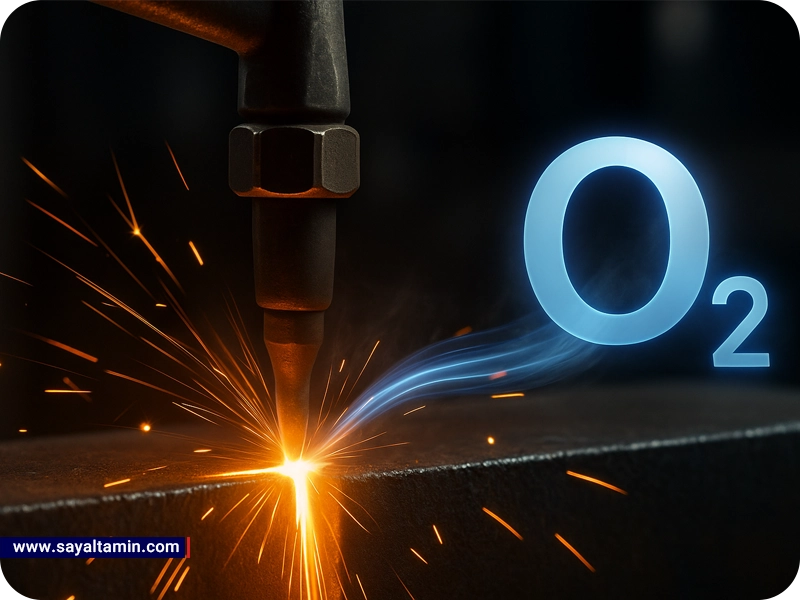
Oxygen gas is known as one of the most vital elements in the metalworking and construction industries. Its role is not only in providing the oxygen needed for chemical reactions, but also in improving the speed, quality and accuracy of metal cutting operations. Especially in situations where there is a need to cut thick metals at high speed, oxygen is a key factor. In addition, the use of the unique chemical properties of oxygen has led to the development of cutting methods such as oxidizing flame cutting and oxidizing plasma cutting, which are widely used in various industries including automotive, shipbuilding, oil and gas, and metal structure construction.
The history of the use of oxygen in metal cutting dates back to the early 20th century, and since then, significant advances have been made in equipment, safety, and application methods. Today, with the introduction of new technologies such as CNC, precise control of oxygen flow and mixed gases, cutting efficiency and quality have improved significantly. This article aims to explain the various aspects of the use of oxygen in metal cutting in simple but specialized language through a scientific and practical review.
Fundamentals of oxygen gas in cutting
Oxygen chemistry in metal cutting
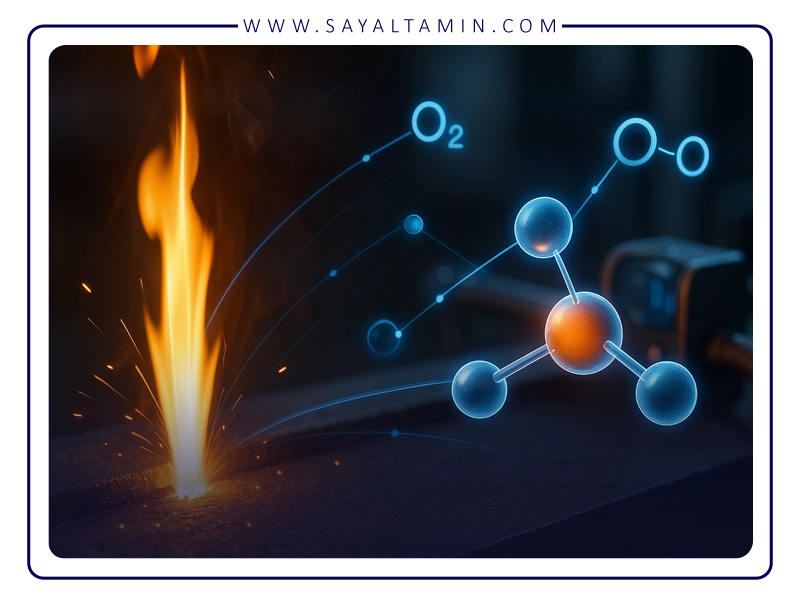
Oxygen, due to its high electronegativity, has a strong tendency to attract electrons, which causes it to undergo oxidation reactions with metals at high temperatures. In this process, the metal rapidly combines with oxygen to form a metal oxide, which is accompanied by the production of additional heat. This heat, which is released as an exothermic reaction, causes the temperature of the cutting zone to increase to such an extent that the molten metal is continuously and uniformly separated.
In practice, this chemical reaction means that some of the energy required to melt the metal is not supplied by the flame, and more heat energy is generated internally by the oxidation reaction. In this way, cutting with oxygen is more energy efficient and faster.
Combustion and oxidation mechanism
The steps of this process are as follows:
• Preheating the metal: A flame produced by a mixture of fuel and oxygen heats the metal to its ignition temperature (usually around 900°C for carbon steel). This step is essential because only at high temperatures can the metal react with oxygen.
• Oxy-fuel cutting: Once the metal has reached its ignition temperature, a high-pressure jet of pure oxygen is directed at the metal surface. This oxygen reacts with the hot metal to form iron oxides. The heat from this reaction helps maintain the high temperature and keeps the metal molten. The oxygen jet also blows molten oxides and metal particles away from the cut to ensure a clean and continuous cut.
Thermal and fluid dynamics
A critical part of successful oxygen cutting is the precise adjustment of oxygen flow parameters. The pressure, velocity, and spray pattern of the oxygen jet must be such that the molten metal is quickly and completely removed from the cut and cooling or slag formation is prevented. Also, the type and design of the torch nozzle has a direct impact on the quality of the cut and the amount of gas consumed. Improper nozzles or incorrect settings can cause unevenness, roughness, and increased fuel consumption.
Cutting techniques using oxygen gas
Oxy-Fuel Cutting
• Historical background: The invention of oxy-fuel flame cutting was made by Carl Wilhelm in the early 20th century, and this method quickly spread in various industries due to its ease of use and low cost. The use of this method allowed thick metal cutting operations to be carried out in workshops and even in open environments with acceptable speed and accuracy.
• Equipment parts: Oxygen and fuel gas cylinders (acetylene, propane or natural gas) are responsible for supplying the gas. Regulators adjust the gas pressure to the appropriate level to create a stable flame and an oxygen jet with the required pressure. Hoses and torches are also designed to provide precise gas combinations and simple operational adjustments.
• Working method: Initially, the preheated flame is ignited by a fuel and oxygen mixture and heats the metal to the required temperature. Then, by activating the oxygen jet, the oxidation reaction begins and the molten metal is continuously removed from the cutting area. The operator guides the cutting with a uniform movement of the torch.
• Advantages: Ability to cut very thick sheets and parts, low equipment costs and energy consumption, portability and use in remote locations, and ease of learning and maintenance.
• Limitations: Limited cutting of non-ferrous metals, possibility of thermally altered zones around the cut that alter mechanical properties, and need for precise adjustment to prevent slag formation and damage to the part.
Oxygen plasma cutting
• Working principle: Plasma, as a very hot ionized gas, has the ability to rapidly melt metals. When oxygen is used as a plasma gas, in addition to thermal energy, an oxidation reaction also occurs, which increases the speed and quality of cutting carbon steel.
• Equipment: The plasma machine includes an electrical power source, a plasma torch, and an oxygen flow supply and control system.
• Advantages: High-speed cutting capability, much better accuracy than flame cutting, reduced need for post-processing (edge cleaning), and the ability to cut different metals by adjusting other gases such as
nitrogen
for stainless steel.
| Read more: Use of oxygen gas in cutting |  |
Oxygen-assisted laser cutting
• In laser cutting, a focused laser beam delivers very high energy to a small spot and melts or vaporizes the metal. Oxygen gas is blown into the cutting area as an auxiliary gas along with the laser to carry away the molten metal and at the same time, the oxidation reaction generates additional heat, which increases the cutting speed and reduces energy consumption. This method is very efficient for precise cutting of carbon steel sheets and some alloys.
| Must Read: Use of Oxygen in the Laser Industry |  |
Advantages of using oxygen gas in cutting
• High speed and efficiency: The oxidation reaction generates heat added to the flame, which increases the melting and separation speed of the metal. As a result, the cutting operation is faster and the production time is reduced.
• Portability and quick setup: Oxidizing flame cutting equipment is relatively light and portable and can be easily used on the job site, in open spaces or in remote areas, which is of great importance in construction projects and emergency repairs.
• Wide application: From heavy industries such as shipbuilding, machinery manufacturing, pipelines, to lighter industries such as automotive and even metal recycling.
Challenges and limitations
• Metal material limitations: Oxygen cutting is mainly suitable for ferrous metals, and non-ferrous metals such as aluminum and copper are difficult to cut due to the formation of resistant oxides. Stainless steel also requires special settings or alternative gases to prevent excessive surface oxidation and maintain edge quality.
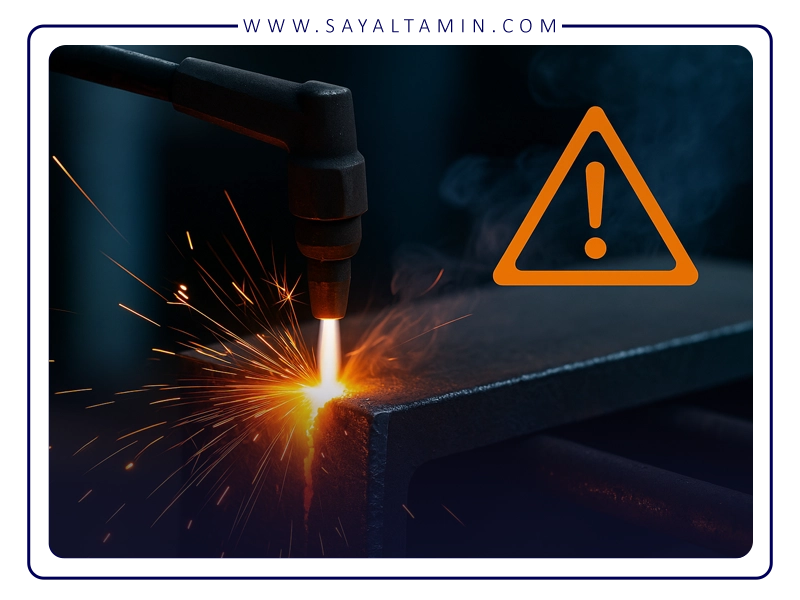
• Safety hazards: Oxygen enhances combustion, and its leakage or improper mixing with fuel gas can cause fire, explosion, or serious injury. Therefore, safety protocols, equipment maintenance, and operator training must be carefully followed.
• Environmental contamination: Smoke and gases from burning gases and metal oxides may be harmful to the health of workers and the environment, requiring appropriate ventilation and filter systems.
• Changes in metallurgical properties: High temperatures and the heat-affected zone (HAZ) may change the internal structure of the metal, reduce hardness, and create residual stresses that negatively affect part performance.
Industrial applications of oxygen gas cutting
• Shipbuilding: Thick steel sheets for ship hulls, decks, and bulkheads are prepared quickly and accurately with oxygen cutting, which reduces costs and construction time.
• Pipeline construction and repair: Portable flame cutting equipment allows for cutting and joining pipes on site, even in remote or harsh environments.
• Automotive and Aerospace: The use of oxygen plasma and laser cutting helps produce complex, high-precision parts, which improves the final product quality and production speed.
• Construction of metal structures: from cutting beams, columns, and steel plates in buildings and bridges to producing special parts with CNC systems for automatic cutting.
• Recycling: In the metal recycling industry, fast and precise cutting of metal parts for separation and preparation for reprocessing is of great importance, which is done with oxygen cutting equipment.
Technological advances in oxygen gas cutting
• CNC and automation systems: The use of computers to precisely control torch movement and regulate gas flow has increased accuracy, reduced waste, and enabled the production of complex, higher-quality parts.
• Increased safety: Designing equipment to higher standards, installing gas leak detection sensors, automatic extinguishing systems, and using oxygen-resistant hoses and fittings have reduced the risk of accidents.
• Alternative gases and improved sustainability: Research into low-cost, environmentally friendly fuel gases such as propane or natural gas continues with the aim of reducing costs and pollution.
• Combination of methods: Combining oxy-fuel cutting with laser or plasma creates hybrid methods that significantly increase cutting speed and quality, allowing for cutting very thick and hard metals.
Oxygen gas plays an undeniable role as a key factor in metal cutting technologies, especially ferrous metals. Oxidizing flame cutting methods are still the most widely used method for cutting thick metals and in non-industrial environments due to their speed, low cost and simplicity. More advanced methods such as plasma and oxygen laser cutting are also used in modern industries due to their higher accuracy and high speed.
Ultimately, a thorough understanding of the chemical and mechanical principles of oxygen cutting and the use of new technologies will enable manufacturers to optimize cutting operations, increase the quality of the final product, and ensure safety and economic savings. The future of these technologies is very bright and promising with the development of new materials, intelligent equipment, and environmental solutions.
————————————————–
Resources
Principles and processes of oxidising flame cutting, history and industrial applications
1. American Welding Society (AWS),
“Oxy-Fuel Cutting Fundamentals,”
www.aws.org
Technical guide to oxygen cutting, equipment, benefits and limitations
2. Lincoln Electric Welding School,
“Cutting with Oxygen,”
www.lincolnelectric.com
The role of industrial gases, including oxygen, in cutting, plasma and laser processes
3. Air Liquide Industrial Gases,
“Industrial Gases in Metal Cutting,”
www.airliquide.com
Safety tips and standards for the use and storage of oxygen gas
4. Compressed Gas Association (CGA),
“Safety Standards for Oxygen Handling,”
www.cganet.com
Investigating new cutting technologies and the role of oxygen in them
5. The Fabricator Magazine,
“Advances in Plasma and Laser Cutting Technology,”
www.thefabricator.com
A reference book on the principles of metal cutting and an examination of different methods.
6. Geoffrey Boothroyd,
Metal Cutting Technology: Theory and Practice, 2006.
ISBN: 978-0123749761