
This post is also available in: Persian Armenian
At first glance, perfumery appears to be a delicate and poetic art—an orchestration of aromas that conveys emotion, memory, and identity. Yet behind this sensory façade lies a rigorously scientific and industrial infrastructure without which commercial-scale perfume production would be impossible. One of the most important elements of that infrastructure is nitrogen gas: a colorless, odorless, inert gas that plays a decisive role in quality, stability, safety, and cost-efficiency across modern fragrance manufacturing.
Nitrogen is not used as an aromatic ingredient. Instead, it functions as a process utility throughout multiple stages—ranging from the extraction of natural raw materials to formulation, storage, packaging, and transportation. This article presents a clear yet technically credible overview of nitrogen’s role in perfumery, suitable both for general readers and for publication on an industrial gas supplier’s website.
The Position of Nitrogen in Modern Perfumery
Nitrogen constitutes roughly 78% of Earth’s atmosphere, but what makes it valuable to perfumery is its very low chemical reactivity under normal conditions. This inertness is crucial because many fragrance compounds are highly sensitive to oxygen, light, and heat.
In perfume manufacturing, the objective is to preserve the intended olfactory profile of both the ingredients and the final formula. Oxidation or unwanted side reactions can shift top notes, dull the composition, reduce longevity, trigger discoloration, or compromise the product altogether. By creating an oxygen-reduced environment, nitrogen acts as a protective blanket, helping ensure the perfume reaches the end user exactly as the perfumer intended.
Nitrogen in the Extraction of Fragrant Raw Materials
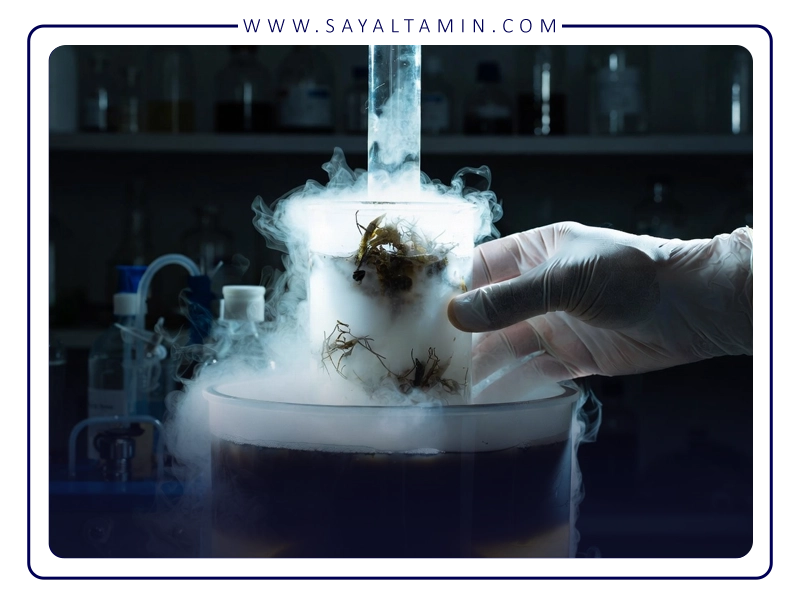
A significant portion of high-quality perfumes relies on natural materials—flowers, woods, resins, spices, and aromatic plants. Extracting odor-active compounds from these sources is among the most sensitive steps in the value chain.
In many modern extraction methods—such as solvent extraction, vacuum distillation, or advanced processing routes—oxygen exposure can degrade fragile aromatic constituents. Nitrogen supports this stage by serving as a blanketing gas: when introduced into extraction vessels, it displaces oxygen and reduces oxidation risk.
For example, in extracting delicate floral aromatics such as jasmine or rose, nitrogen blanketing can help preserve a cleaner, fresher, more true-to-nature aromatic signature. This is especially critical for premium and luxury brands where authenticity and fidelity of scent are non-negotiable.

Nitrogen and Oxidation Control During Perfume Formulation
After raw materials are prepared, formulation begins—where a perfumer precisely blends aroma compounds, ethanol, and other components in defined ratios. Nitrogen plays a key role here as well.
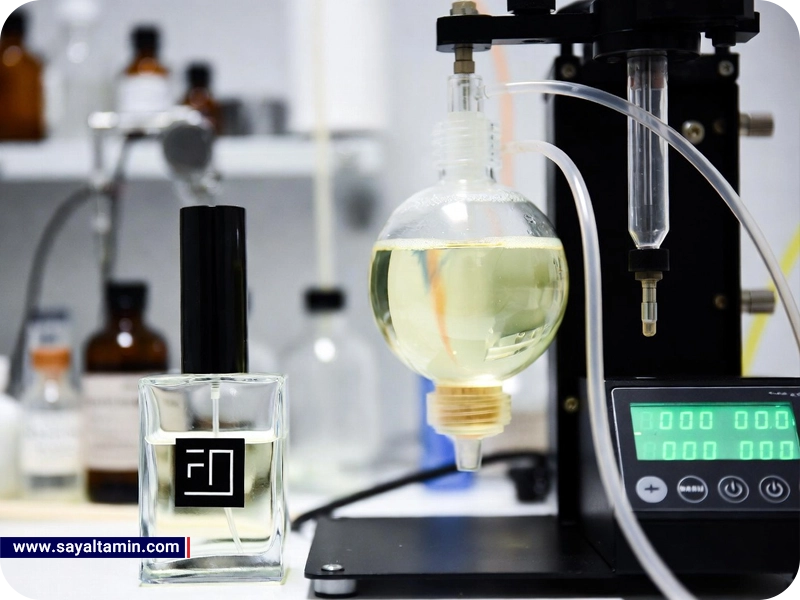
Perfume ethanol is typically high-purity ethanol, and while ethanol itself is relatively stable, the dissolved aromatic molecules may oxidize in the presence of oxygen. As a result, many industrial production lines employ nitrogen blanketing on mixing tanks. This practice replaces oxygen in the tank headspace with nitrogen, reducing oxidation and maintaining chemical stability.
The outcome is improved batch-to-batch consistency, longer shelf life, reduced off-odors, lower waste, and higher end-customer satisfaction—benefits that translate directly into operational and commercial value.
Nitrogen in Perfume “Maturation” (Aging)
Many perfumes require an aging or maturation period after initial blending. Over weeks or months, the components reach olfactory equilibrium and the intended fragrance character stabilizes.
During this stage, oxygen can alter the maturation pathway and generate results that deviate from the target profile. For that reason, some high-end manufacturers maintain an inert nitrogen atmosphere in storage vessels during maturation.
Here, nitrogen acts as a stabilizing environment: it does not participate in the chemistry, but it prevents uncontrolled reactions, enabling a predictable and repeatable maturation process.
Nitrogen in Filtration and Clarification
After maturation, perfumes often undergo filtration to remove suspended particles, impurities, or precipitates. This step is essential for achieving a bright, crystal-clear appearance—particularly in luxury products.
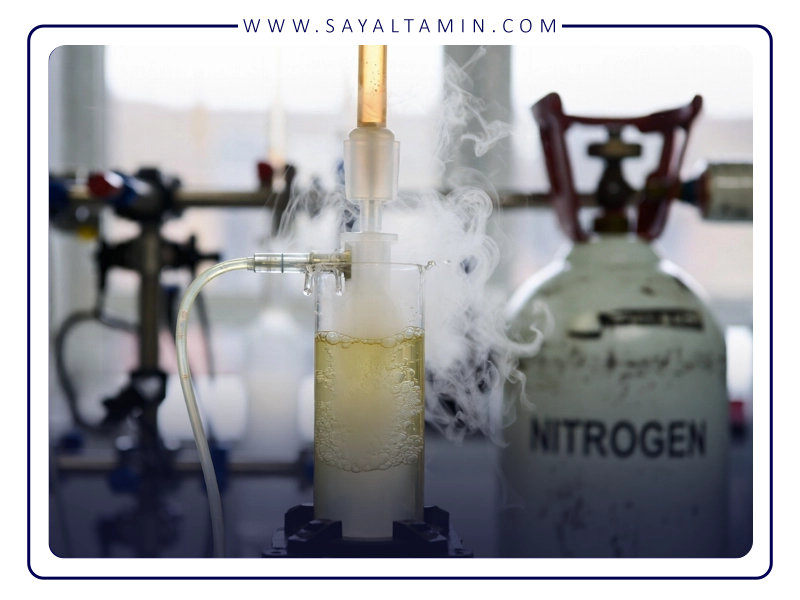
In certain industrial filtration systems, nitrogen is used as the pressurizing gas to push the perfume through filters. Compared with compressed air, nitrogen offers a key advantage: it minimizes oxygen contact during clarification. This reduces oxidation risk and helps maintain the intended scent and color.
Nitrogen in Perfume Packaging
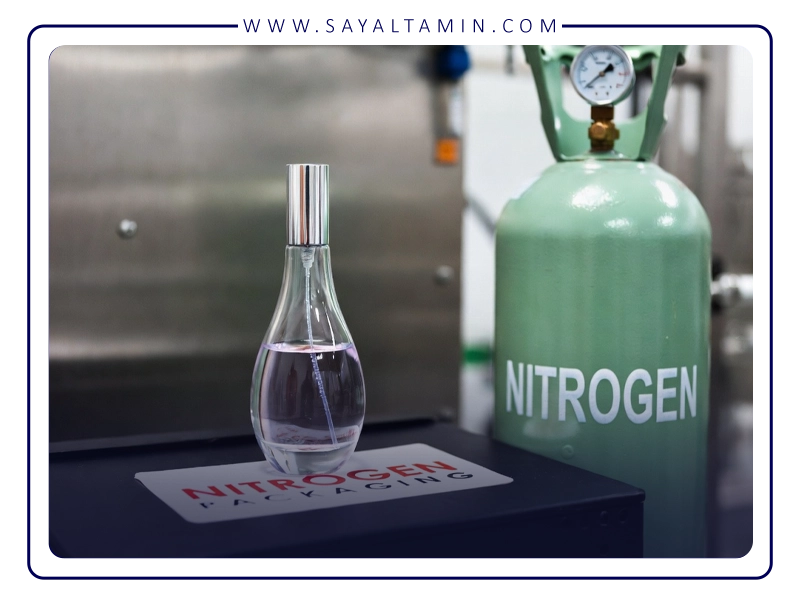
Packaging is the final point of direct control before the product reaches distribution—yet it remains one of the most quality-critical stages. Even a perfectly formulated perfume can degrade quickly if oxygen remains trapped in the bottle headspace.
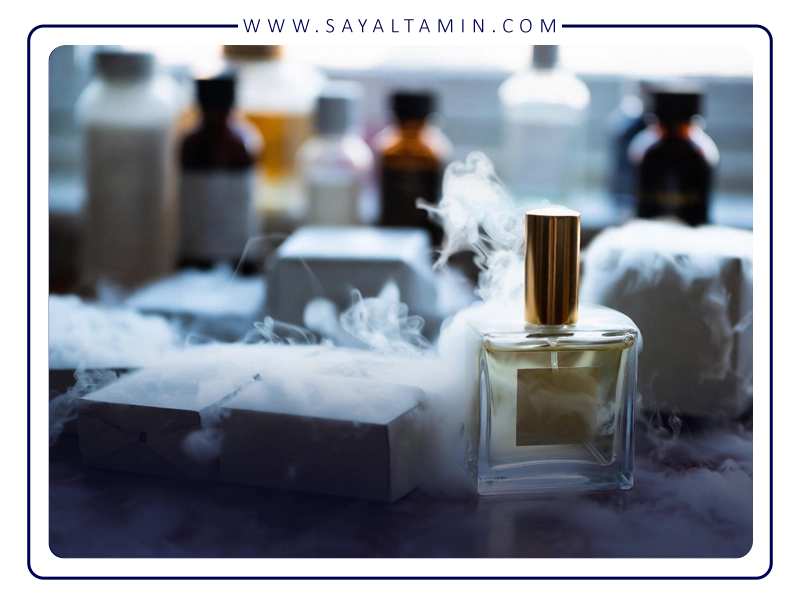
Advanced filling lines often use nitrogen flushing. In this approach, the air inside the bottle is replaced with nitrogen immediately before filling or right after filling. This reduces residual oxygen to the lowest practical level.
The result is improved fragrance longevity, better stability of the original aromatic signature, and reduced likelihood of discoloration or off-notes over time—especially important for export products and long supply chains.
Nitrogen and Safety in Perfume Production Facilities
Industrial perfume manufacturing carries real process hazards. Large-scale use of flammable alcohols, solvents, and certain chemicals increases the risk of fire and, under some conditions, explosion.
Because nitrogen is inert, it supports safety through inerting and blanketing of ethanol storage tanks, transfer lines, and selected process equipment—lowering oxygen concentration and thereby reducing ignition potential.
From a process safety standpoint, nitrogen helps protect personnel, prevent major asset loss, and reduce the likelihood of production downtime.
Linking Nitrogen Use in Perfumery to the Industrial Gas Value Chain
For companies active in industrial gases and condensates, highlighting nitrogen applications in perfumery represents a strategic opportunity. Nitrogen—especially high-purity grades—is an essential industrial utility with strong supply-chain alignment to gas production, storage, and distribution capabilities.
Producing, storing, and delivering high-purity nitrogen requires infrastructure and know-how typically found in industrial gas and condensate businesses. Demonstrating its role in high-value sectors such as perfumery showcases market diversity and helps communicate the broader value proposition of industrial gases beyond traditional heavy industry.
The Future of Nitrogen in the Fragrance Industry
As technology advances and consumer expectations for product stability rise, nitrogen’s role in perfumery is expected to grow. Trends include smarter atmosphere-control systems, improved nitrogen-use efficiency, and alignment with greener manufacturing practices.
Greater awareness of nitrogen’s quality and cost advantages will likely accelerate its adoption—positioning nitrogen as a standard component of modern fragrance manufacturing operations.
Practical Tables: Nitrogen Applications in Perfumery
Table 1 — Production Stages and the Role of Nitrogen
| Production Stage | Role of Nitrogen | Primary Benefit |
| Raw material extraction | Inert atmosphere, oxygen displacement | Preserves natural aroma; prevents degradation of sensitive compounds |
| Formulation | Tank blanketing / headspace inerting | Improves chemical stability and product consistency |
| Maturation (aging) | Controlled inert atmosphere in storage | Stabilizes scent profile; reduces unwanted changes |
| Filtration | Inert pressurizing gas instead of air | Prevents oxidation during clarification |
| Packaging | Nitrogen flushing of bottles | Extends shelf life; maintains original scent stability |
Table 2 — Air vs. Nitrogen in Perfume Processing
| Comparison Criterion | Using Air | Using Nitrogen |
| Oxidation level | High | Very low |
| Fragrance stability | Moderate to weak | High and controllable |
| Flammability risk | Higher | Lower |
| Long-term product quality | Variable | Consistent and stable |
Table 3 — Commercial Value of Nitrogen for Perfume Manufacturers
| Industrial Aspect | Nitrogen Impact | Economic Outcome |
| Waste reduction | Prevents perfume spoilage | Lower production cost |
| Extended shelf life | Preserves quality over time | Higher customer satisfaction; fewer returns |
| Plant safety | Reduces fire risk | Avoids major financial loss and downtime |
| Export readiness | Stability over long transport | Enables broader international market reach |
Nitrogen does not contribute directly to a perfume’s scent, but behind the scenes it plays a critical and measurable role. From protecting delicate raw materials to improving consistency, extending shelf life, enabling safer operations, and supporting export stability, nitrogen is a hidden but essential pillar of modern perfumery.
For industrial gas and condensate suppliers, communicating these applications is more than educational—it strengthens technical credibility and highlights how industrial gases create value even in high-sensitivity, premium industries such as fragrance manufacturing.
————————————————–
References
• Lang, R., & Duft, B. (2020). Perfume and Flavour Technology: From Extraction to Market. Springer International Publishing.
• Sell, C. S. (2006). Chemistry of Fragrances: From Perfumer to Consumer. Royal Society of Chemistry.
• Kraft, P., & Egger, J. (2019). The Role of Nitrogen in Industrial Applications: Food, Cosmetics, and Fragrance Industries. Industrial Gas Journal, 12(3), 45-62.
• Poucher, W. A., & Poucher, J. (1993). Poucher’s Perfumes, Cosmetics and Soaps. Springer.