


This post is also available in: Persian Armenian
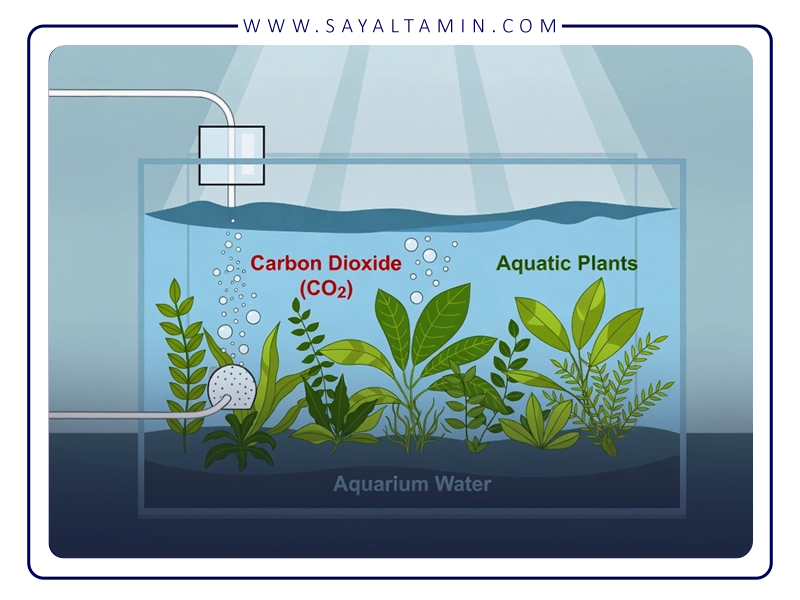
Planted aquariums are among the most popular types of aquariums worldwide. Beyond their strong visual appeal, they play a crucial role in creating a stable and healthy ecosystem for fish and other aquatic organisms. One of the primary challenges in maintaining a planted aquarium is meeting the nutritional requirements of aquatic plants. Similar to terrestrial plants, aquatic plants require three fundamental elements for healthy growth: light, nutrients, and carbon dioxide (CO₂).
Carbon dioxide plays a central role in photosynthesis—the process through which plants convert light energy into chemical energy for growth. In aquarium environments, the naturally dissolved CO₂ in water is often insufficient to support optimal plant development, particularly in densely planted tanks. As a result, CO₂ supplementation has become one of the most effective methods for improving plant growth, coloration, and overall aquarium health.
The Role of Carbon Dioxide in Aquatic Plant Growth
Photosynthesis and the Importance of CO₂
Aquatic plants, like land plants, rely on photosynthesis, which requires light, water, and carbon dioxide. During this process, plants absorb CO₂ and, with the aid of chlorophyll and light energy, convert it into glucose and oxygen:
6CO₂ + 6H₂O + light → C₆H₁₂O₆ + 6O₂
In natural aquatic environments, the concentration of dissolved CO₂ is limited and often insufficient for rapid or dense plant growth. This limitation becomes even more pronounced in home aquariums with high plant density. A lack of CO₂ typically results in slow growth, pale leaves, weakened plant structure, and increased susceptibility to algae.
Effects of CO₂ on Plant Quality and Aquarium Health
Proper CO₂ supplementation in planted aquariums leads to several benefits, including:
- Faster plant growth: Stronger stems, larger leaves, and healthier overall structure
- Deeper coloration: Enhanced chlorophyll production results in richer green and red tones
- Reduced algae growth: Algae often thrive in low-CO₂ conditions; sufficient CO₂ allows plants to outcompete algae
- Improved oxygen production: More active photosynthesis increases dissolved oxygen, benefiting fish and invertebrates
Methods of Supplying CO₂ in Planted Aquariums
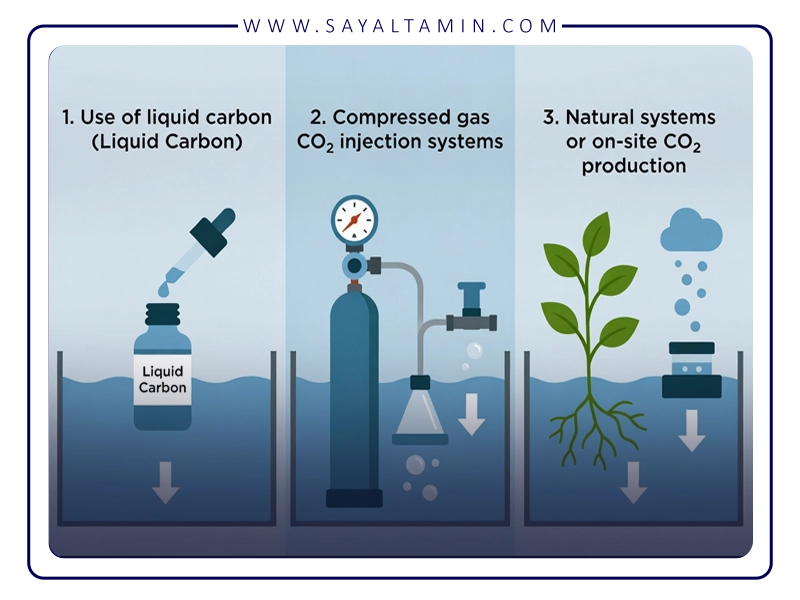
Providing an adequate carbon source is one of the most critical factors in planted aquarium success. Several methods are available, each with specific advantages and limitations depending on aquarium size, plant demand, and user experience.
Liquid Carbon Supplements
Liquid carbon products are commercial solutions containing bioavailable carbon compounds that dissolve easily in aquarium water and can be absorbed by plants. These products are typically used in small to medium aquariums.
Advantages:
- High safety margin for fish and aquatic life
- Easy to use with no complex equipment
- Flexible dosing based on aquarium volume and plant density
Limitations:
- Less effective than pressurized CO₂ injection
- Does not provide a stable or long-lasting CO₂ concentration
- Requires frequent dosing to maintain effectiveness
Liquid carbon supplements are best suited for small aquariums, sensitive setups, or beginners seeking a simple and safe solution. However, they are generally insufficient for large or heavily planted aquariums.
Pressurized CO₂ Injection Systems
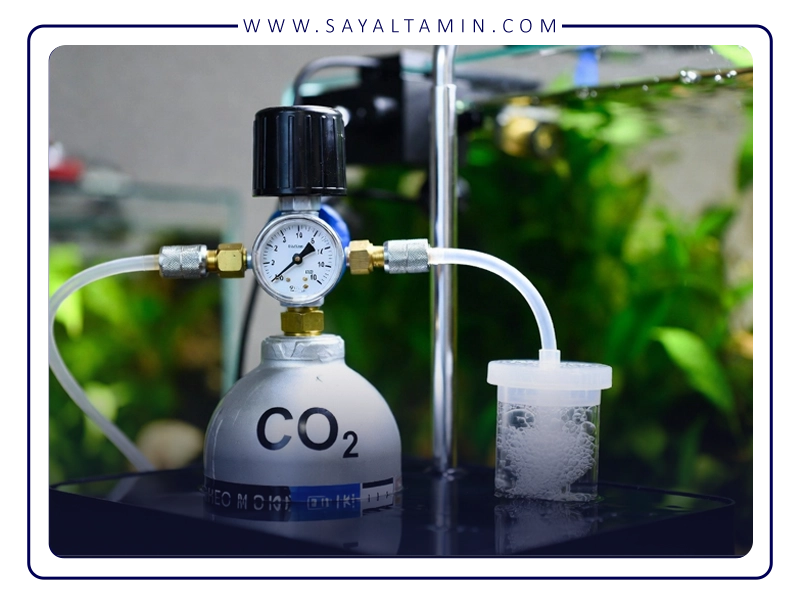
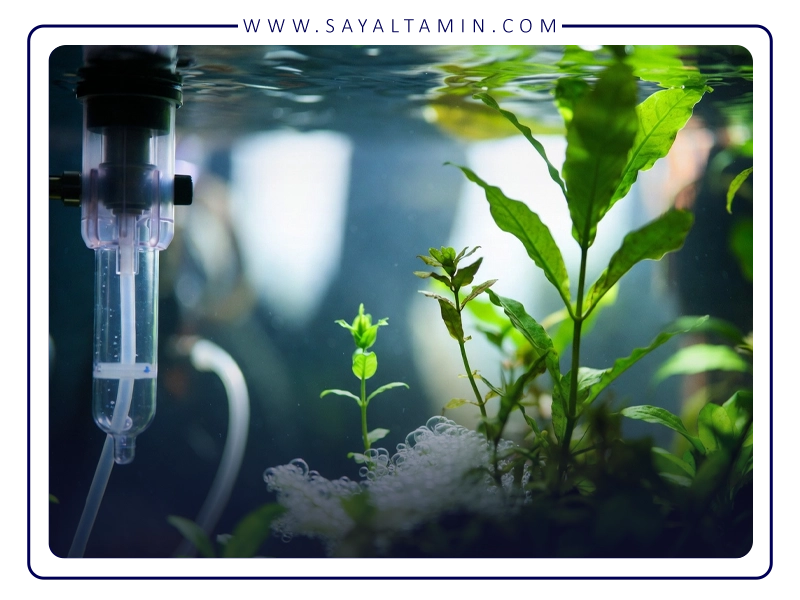
Pressurized CO₂ systems consist of a CO₂ cylinder, pressure regulator, control valve, and diffuser. These systems inject CO₂ gas into the aquarium as fine bubbles, allowing efficient dissolution and absorption by plants. This method is widely used in professional and large planted aquariums.
Advantages:
- Stable and long-term CO₂ supply
- Precise control of injection rate and timing
- Significant improvement in plant growth and coloration
Limitations:
- Higher initial investment
- Requires routine monitoring to prevent leaks or over-injection
Pressurized CO₂ systems are the preferred choice for aquariums with high plant density or demanding plant species such as Glossostigma, Hemianthus, and Rotala.
Natural or DIY CO₂ Generation Methods
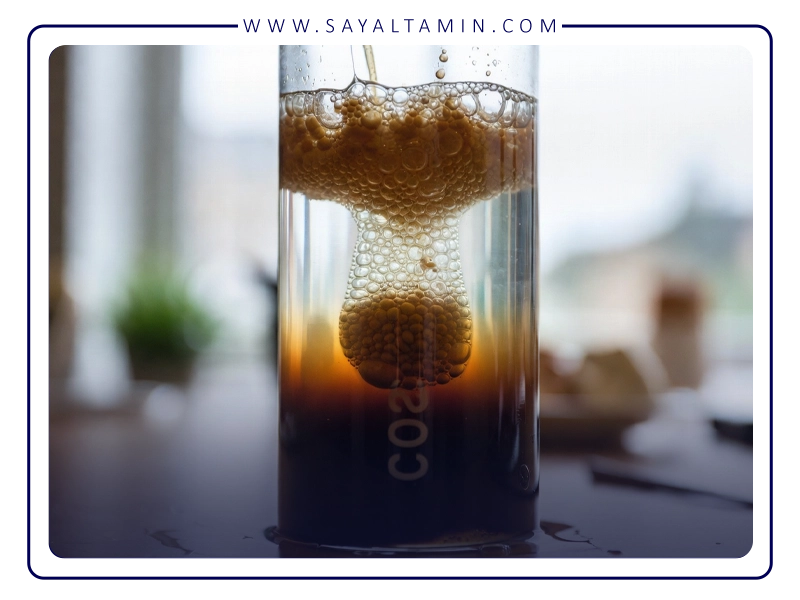
Natural CO₂ systems typically rely on fermentation processes using yeast and sugar to produce CO₂.
Advantages:
- Low cost and easy access to materials
- Simple setup for experimental or small tanks
Limitations:
- Unstable and unpredictable CO₂ output
- Difficult to control CO₂ concentration
- Potential pH fluctuations and algae promotion
These systems are generally suitable for small aquariums or hobbyist experiments but are not recommended for professional or high-performance planted tanks.
Balancing CO₂ Levels: Plant Growth vs. Fish Safety
CO₂ injection must be carefully regulated to ensure plant health without compromising fish safety. The commonly recommended CO₂ concentration for planted aquariums ranges between 20–30 mg/L, depending on plant species and tank conditions.
Monitoring and Control Methods:
- CO₂ test kits: Chemical kits provide direct measurement of dissolved CO₂
- pH controllers: CO₂ levels influence pH, allowing indirect control via automated systems
- Fish behavior observation: Rapid breathing or surface gathering may indicate excessive CO₂
Signs of CO₂ Deficiency:
- Slow or stunted plant growth
- Pale, brittle, or undersized leaves
- Increased algae presence
Signs of CO₂ Excess:
- Rapid or labored fish respiration
- Fish gathering near the water surface
- Sudden pH drops causing stress or mortality
Maintaining a stable CO₂ concentration is particularly critical in high-tech planted aquariums.
The Interaction of Light and Nutrients with CO₂
CO₂ supplementation alone is not sufficient without proper coordination with lighting and nutrient supply.
- Lighting: High light intensity without adequate CO₂ leads to algae outbreaks. Conversely, excessive CO₂ under low light yields limited benefits.
- Fertilization: Macronutrients (N, P, K) and micronutrients must be available in balanced proportions.
- Substrate quality: Nutrient-rich substrates support healthy root development and improve plant resilience.
Successful planted aquariums rely on maintaining balance among these three elements.
Common Issues and Practical Solutions
Algae Growth
Algae outbreaks typically result from imbalances among CO₂, light, and nutrients.
Solutions:
- Ensure stable and adequate CO₂ injection
- Adjust lighting intensity and duration
- Use balanced fertilization
- Perform regular pruning and maintenance
pH Instability
Excessive CO₂ can cause rapid pH drops.
Solutions:
- Monitor pH and CO₂ regularly
- Adjust injection rates gradually
- Avoid sudden changes in CO₂ levels
Uneven Plant Growth
Some plants may thrive while others struggle.
Solutions:
- Improve CO₂ distribution with proper water circulation
- Ensure even lighting coverage
- Use comprehensive fertilization programs
Carbon dioxide plays a vital role in the success of planted aquariums. Selecting the appropriate CO₂ delivery method depends on aquarium size, plant density, budget, and user expertise. In summary:
- Adequate CO₂ promotes healthy, vigorous plant growth and reduces algae competition.
- Precise control of CO₂ levels is essential for fish safety and ecosystem stability.
- Balanced coordination of light, CO₂, and nutrients is the foundation of planted aquarium success.
- Liquid carbon products are suitable for small or beginner setups, while pressurized CO₂ systems are recommended for large and professional aquariums.
By following these principles, aquarists can create vibrant, healthy, and visually stunning planted aquariums that support both plant and aquatic life.
————————————————–
References
• “How do you use CO₂ in a planted aquarium? — A Comprehensive Guide” (The Environmental Literacy Council) (enviroliteracy.org)
• “Carbon Dioxide and Plants in the Aquarium” (AquariumScience.org)
• “Carbon in the Planted Aquarium” — Guide by Dr. Gregory Morin (e-lss.jp)