
This post is also available in: Persian Armenian
A concise review of the most important gas applications in the beverage industry
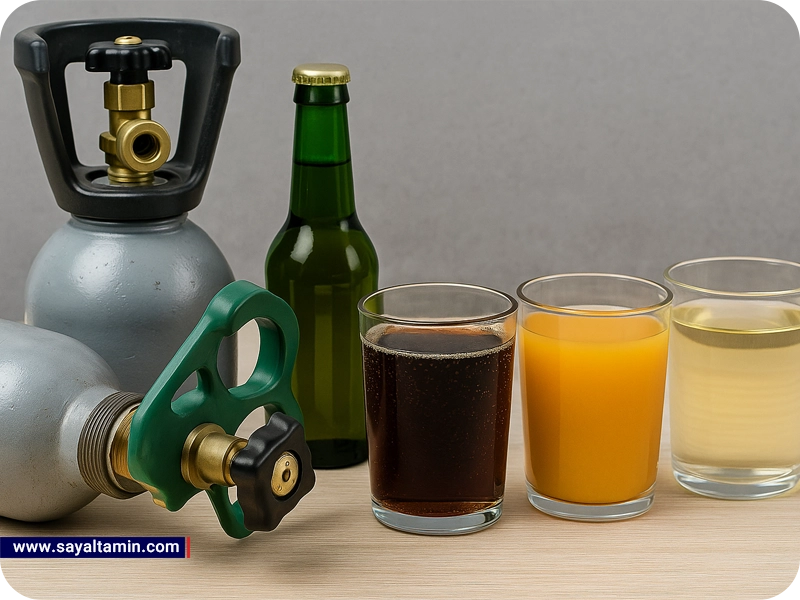
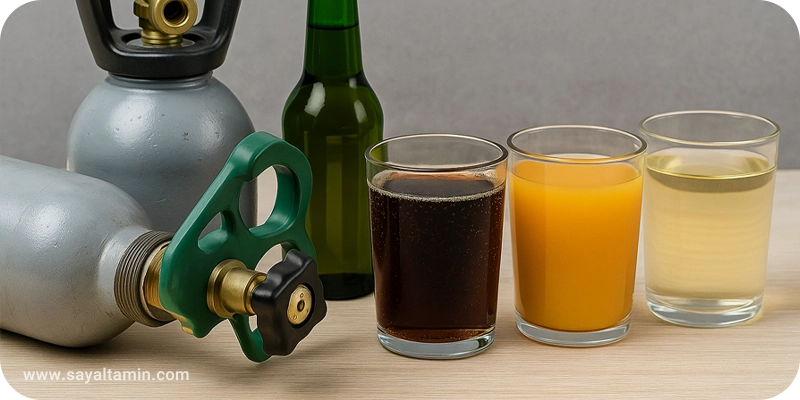
A number of core processes in the beverage industry are only possible—or only efficient—because of gases. For more than a century, carbon dioxide (CO₂) has been the star of carbonation in soft drinks and beer. Today, the portfolio is wider: nitrogen (N₂) and argon (Ar) are indispensable during storage, transfer, and filling, primarily to displace oxygen and stabilize pressure. In modern winemaking, gases have also become mainstream, enabling higher product quality through inerting, oxidation control, cooling, and gentle handling of must and wine.
Since industrial CO₂ production began in 1879, carbonated mineral waters and beers have relied on dissolved CO₂ for their signature effervescence. The list of carbonated beverages has expanded dramatically, and alongside carbonation, gases are now central to inerting (oxygen displacement), blanketing, sparging, and pressure stabilization. This article reviews the role of CO₂, N₂, and Ar in beverage quality, outlines key process methods (carbonation, sparging, inerting, blanketing, filling), and highlights regulatory and best-practice considerations that safeguard safety, shelf life, and flavor.
Core Gases and Their Roles
Carbon Dioxide (CO₂)
Ever wonder what delivers the lively fizz in a favorite soft drink? The answer is carbon dioxide. Dissolved CO₂ is responsible for the fine bubbles and brisk mouthfeel that consumers expect in carbonated beverages. Beyond sensory effects, CO₂ contributes to microbial stability by inhibiting spoilage organisms, thereby extending shelf life and helping beverages retain flavor and quality over time.
CO₂ is used across categories: soft drinks, seltzers and sparkling waters, as well as beer and sparkling wine. Tight control of dissolved CO₂ during production and packaging preserves brand-specific taste and carbonation profiles. In beer, stable CO₂ levels are critical for foam quality, mouthfeel, and protection from oxygen pickup. In sparkling wines, precise CO₂ management underpins bubble size distribution, head retention, and the balance between acidity and perceived sweetness.
| Read more: Use of liquid carbon dioxide in carbonated drinks |  |

Nitrogen (N₂)
Nitrogen is inert—chemically non-reactive—making it ideal for protecting beverage quality wherever oxygen would damage aroma, flavor, color, or nutritional value. By displacing oxygen, nitrogen suppresses oxidative reactions and curbs the growth of aerobic microorganisms. It has exceptionally low solubility in water, which the industry leverages for headspace management in still beverages and for pressure stabilization of lightweight containers.
Nitrogen also plays a sensorial role. In “nitro” products—most famously nitro stouts and nitro cold brew coffee—dissolved N₂ creates a dense, fine bubble structure that yields a velvet-smooth, creamy texture. This mouthfeel enhancement happens without altering the intrinsic flavor profile, making N₂ a powerful tool for crafting distinctive drinking experiences.
| Must read: Liquid nitrogen in beverage bottle dosing |  |
Argon (Ar)
Argon is a noble gas, heavier than air and more inert than nitrogen. In winemaking and high-value beverage processing, argon can be used to blanket tanks and barrels, shielding product from oxygen exposure during transfers, racking, or storage. Because it is denser, argon forms a stable protective layer more readily than nitrogen in certain geometries, though its higher cost often reserves it for premium or sensitive applications. Argon can also be applied to purge lines and vessels where absolute oxygen control is paramount.
A Note on Oxygen (O₂)
While oxygen is usually the enemy of shelf life—driving oxidative flavor changes, color shifts, and nutrient loss—it can be used strategically in controlled maturation processes. Select winemaking and cheesemaking practices, for example, use limited oxygen exposure to develop complexity. The key is tight control: outside narrow process windows, oxygen rapidly becomes detrimental.
Preserving Flavor: How Gases Protect Taste
Flavor is king in beverages, and gases help lock it in. Oxygen management is central: exposure during storage or packaging can dull hop aromatics in beer, stale delicate fruit notes in soft drinks, and flatten nuanced varietal aromas in wine. Using inert gases to purge lines and headspaces, blanket tanks, and protect during filling keeps flavor compounds intact from tank to table.
Nitrogen is widely used to guard aroma in oxygen-sensitive products like coffee and wine. In beer, minimizing total package oxygen (TPO) is a top priority; CO₂ or N₂ purges and correctly designed filling sequences are essential for flavor stability. In still beverages with subtle flavor profiles, headspace nitrogen helps prevent oxidative browning and off-odors.
Carbonation (Correcting the term “Calibration” → Carbonation)
Carbonation is the dissolution of CO₂ into a beverage. Typical dissolved CO₂ ranges (illustrative) include:
- Beer: ~5 g/L
- Soft drinks: ~5–9 g/L
- Sparkling wine: ~2.5 g/L (often higher for certain styles)
The final carbonation level depends on:
- Pressure and temperature (per Henry’s law): lower temperature and higher pressure increase solubility.
- Pre-process oxygen/air content: degassing the liquid first improves efficiency and sensory stability.
- Contact area and residence time: larger gas–liquid interface and sufficient contact duration accelerate dissolution.
Because most beverages are water-based, solubility in water is a useful reference point: from roughly 4 g/L (typical of modestly carbonated water or beer) to ~14 g/L (for higher-pressure sparkling wines). The celebrated “sparkle” arises precisely because CO₂ dissolves readily—then effervesces when pressure is released.
Formulation effects matter. Ethanol and sweeteners shift CO₂ equilibrium pressure. For example, to maintain 7 g CO₂ per liter in water at 5 °C, an equilibrium pressure of ~2.5 bar is required. Small changes in temperature or composition can move that target significantly, so in-line measurement and control are industry best practices.

Sparging: Fine Bubbles, Big Surface Area
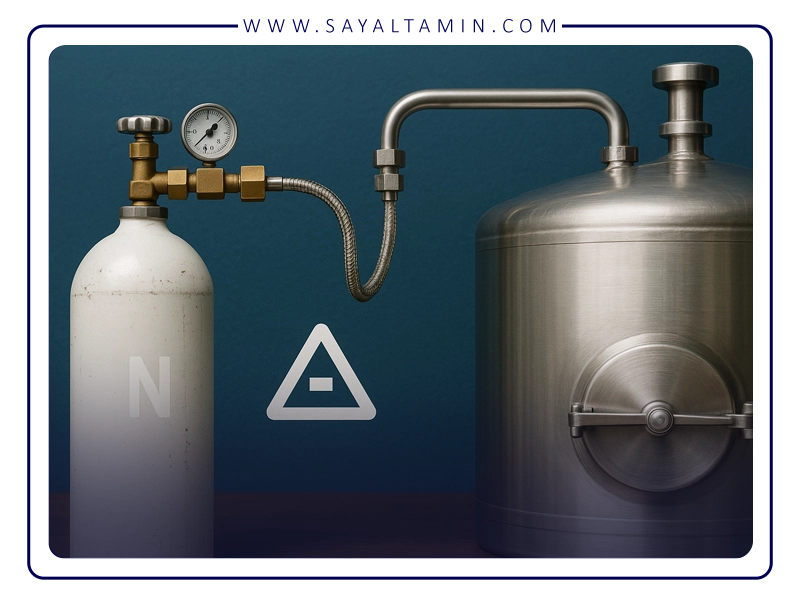
Sparging introduces a gas into liquid through a porous metal element (a sintered frit), producing fine bubbles and maximizing the gas–liquid interface. In carbonation systems, CO₂ sparging boosts dissolution efficiency. For oxygen removal, N₂ sparging strips dissolved O₂ prior to filling, improving flavor stability and shelf life. Bubble size distribution, frit pore size, and flow regime determine mass transfer rates and, ultimately, process efficiency.
Inerting (Deoxygenation of Vessels and Liquids)
Inerting converts a reactive environment into an inert one by adding a non-reactive gas (N₂, CO₂, or Ar). The goal in beverage processing is to remove atmospheric oxygen from a container or liquid to prevent oxidation that degrades aroma, flavor, color, and functional ingredients.
A simple approach is to fill empty tanks with nitrogen or carbon dioxide until oxygen is diluted to the desired residual. Gas consumption typically runs ~1.3–3× the tank volume, depending on tank geometry and the target O₂ concentration. Tall, narrow tanks purge more easily than squat tanks; wide vessels promote back-mixing and make inerting harder.
For partially filled vessels, inerting the headspace is key. Gas should enter from the top opening in a manner that allows displaced air to exit simultaneously. Consumption is higher for headspace inerting than for full-tank purges. As a rule of thumb at 1 bar:
- To reach 2% residual O₂, plan roughly 3 m³ N₂ per m³ of headspace.
- To reach 1% residual O₂, plan roughly 5 m³ N₂ per m³ of headspace.
| Read more: Oxygen gas in hyperbaric oxygen therapy (HBOT) |  |
Blanketing: Holding a Protective Cover
Blanketing maintains a continuous protective layer of inert gas over the product. The target is effectively 0% oxygen at the interface. As fill level changes, gas addition must track volume changes in real time.
- Atmospheric storage (no pressure): Approx. 1.1 m³ N₂ per m³ of product withdrawn keeps the blanket intact. When product is added, displaced gas must vent freely to avoid over-pressure.
- Pressurized storage (e.g., 300 mbar tank pressure): Consumption is higher—about 1.3 m³ inert gas per m³ product removed—again with proper venting to hold pressure constant during additions.
Argon can be advantageous for premium wines or sensitive products because its higher density forms a stable interface layer; however, most producers balance performance with cost and choose nitrogen for routine blanketing.
Filling: Minimizing Oxygen Pickup
Modern filling lines are engineered to minimize oxygen ingress. Two widely used approaches are counter-pressure filling and pre-evacuation with gas back-flush:
- Counter-pressure filling: Bottles are pre-pressurized with an inert gas to match product pressure. Filling down the inner wall reduces surface agitation and keeps oxygen pickup to as low as ~0.2–0.3 mg O₂ per bottle. Gas consumption is typically 2–3× bottle volume, and many lines do not recover pressurized gas, trading efficiency for speed and simplicity.
- Pre-evacuation + gas back-flush: Bottles are first evacuated, then back-filled with N₂ or CO₂ before the product is introduced. This method is extremely efficient with gas consumption ≲ bottle volume, achieving ~0.1–0.2 mg O₂ per bottle residual pickup.
For still beverages, a simple post-fill nitrogen injection (via frit into the product stream or headspace) sweeps oxygen from the top space before capping. Because nitrogen is poorly soluble, micro-bubbles rise into the headspace, displacing air just prior to closure. Note: This method is not used for carbonated beverages—N₂ sparging would strip CO₂ from the product.
Pressure Stabilization for Cans and PET
Pressure Stabilization for Cans and PET
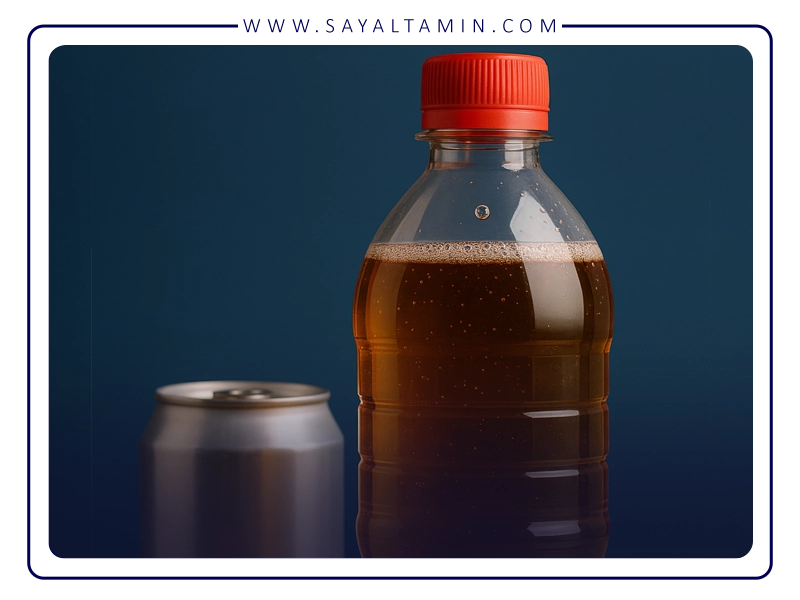
Lightweight cans and thin-wall PET bottles containing still beverages cannot be stacked securely without internal support. A proven solution is to dose a few drops of liquid nitrogen onto the surface just before sealing. As the LN₂ boils, it raises the internal pressure of the sealed container, adding rigidity for stacking and transport. The nitrogen present in the headspace also protects against oxidation, extending shelf life. The dose is engineered to avoid perceptible changes to flavor or safety.
Innovative Flavor and Texture Techniques
Nitrogen’s role extends beyond preservation. Nitro infusion—now common in both beer and coffee—creates a creamy, cascading head and rounded mouthfeel, while leaving the beverage’s inherent flavor intact. Compared with CO₂, which sharpens acidity and bite, N₂ softens texture and emphasizes body. Brewers often blend CO₂ and N₂ to balance foam, mouthfeel, and aroma retention in specialty styles.
Practical Process Options and Energy Integration
At its simplest, carbonation can be achieved by pressurizing the vessel with CO₂, allowing the product to absorb gas until saturation at the given temperature. While straightforward, this approach is slower and more pressure-dependent.
Modern systems favor in-line dissolution using static mixers or nozzle systems, which achieve rapid, high-efficiency mass transfer at controlled flow rates and often with less dependence on high vessel pressure. Many plants also recover refrigeration duty from the latent heat of evaporation of the bulk CO₂ tank, using it to pre-cool product before carbonation—reducing energy consumption and improving CO₂ solubility.
Quality, Purity, and Safety: Why Gas Grade Matters
When using specialty gases in food and beverage processing, purity is non-negotiable. Trace contaminants in gases can directly cause off-flavors, discoloration, oxidation, or even food safety hazards. For this reason, processors specify food-grade or beverage-grade gases with documented impurity limits (e.g., moisture, hydrocarbons, CO, NOₓ, oil, particulates).
Best practice includes:
- Sourcing gases from certified suppliers with food/beverage specifications.
- Installing filters and backflow prevention to protect lines.
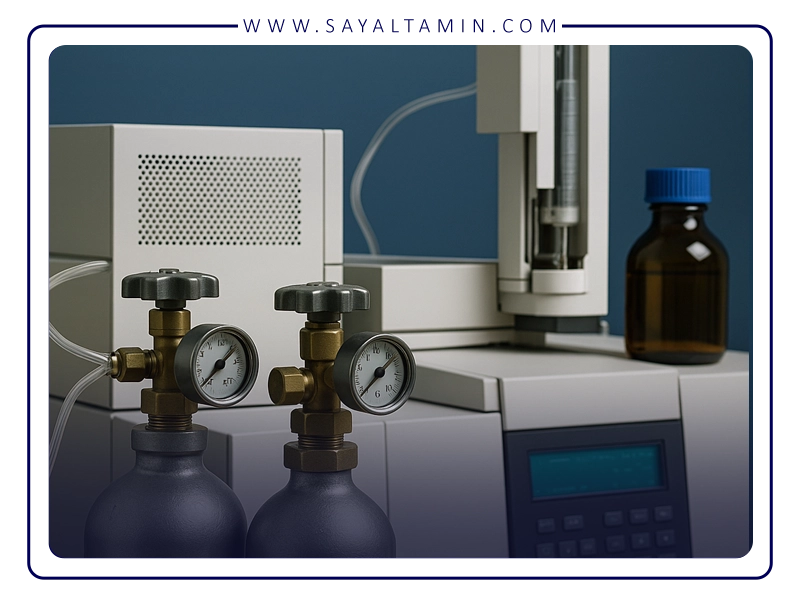
- Conducting routine gas purity testing (e.g., gas chromatography) to detect even low-level contaminants.
- Implementing preventive maintenance for vaporizers, valves, regulators, and dosing equipment to avoid oil or particulate carryover.
Regulatory Considerations
Regulatory bodies set clear expectations for gas use in foods and beverages. In the United States, the FDA provides guidance and compliance frameworks for indirect food additives and processing aids such as CO₂ and N₂. In the EU, the European Food Safety Authority (EFSA) and the Codex Alimentarius standards underpin requirements for gas purity, handling, and application across processing, packaging, and storage.
Compliance is more than a checkbox—it sustains consumer trust and brand integrity. Labels, specifications, and supplier documentation should be maintained to demonstrate conformity with applicable standards and ensure a consistent, safe supply chain.
Best Practices for Safety and Quality
To keep oxygen low, carbonation precise, and flavor intact, leading producers apply an integrated set of controls:
- Process Design
- Minimize product exposure to air: short transfer lines, closed systems, and properly designed vents.
- Choose tank geometries and flow paths that discourage back-mixing during inerting.
- Use in-line CO₂ dissolution (static mixers/nozzles) for efficient, reproducible carbonation.
- Operational Controls
- Pre-degassing of product where needed to remove dissolved oxygen.
- Pre-evacuation + gas back-flush on filling lines to achieve very low TPO.
- Temperature control for carbonation (colder is better for CO₂ uptake at lower pressure).
- Real-time monitoring of dissolved CO₂/O₂ and headspace oxygen.
- Gas Management
- Specify food/beverage-grade gases and maintain certificates of analysis.
- Inspect and service vaporizers, dosing valves, frits, and regulators.
- Use appropriate filtration and moisture control on gas lines.
- Quality Systems
- Routine analytical verification (e.g., GC for impurities, optical O₂ analyzers for TPO).
- Implement HACCP focused on gas-related hazards (e.g., contamination, mis-dosing, oxygen ingress).
- Staff training on gas safety (cryogenic handling, pressure hazards, O₂ deficiency risks) and quality procedures.
Key Takeaways
Specialty gases—especially CO₂ and nitrogen, with argon for premium oxygen control—are fundamental to modern beverage manufacturing. They:
- Enhance product quality and shelf life by preventing oxidation and managing microbial risk.
- Shape sensory experience—CO₂ for sparkle and bite, N₂ for creamy texture.
- Enable efficient processing through sparging, inerting, blanketing, and precise filling.
- Support package performance (e.g., LN₂ for pressure-stabilizing still beverages in cans/PET).
- Rely on stringent purity standards and regulatory compliance to keep consumers safe.
As technology advances, gases will play an even bigger role in delivering beverages that are fresher, safer, and more enjoyable—while helping producers meet evolving consumer expectations for quality and consistency.
————————————————–
References