


This post is also available in: Persian Armenian
Graphite furnaces have become a vital component in advanced industries due to their ability to achieve very high temperatures and create a reducing environment. These furnaces are widely used in processes such as metallurgy, ceramic manufacturing, and advanced materials production. For the optimal performance of these furnaces, the selection of an appropriate shielding gas is of great importance. Argon (Ar) gas, as a noble and inert gas, is a desirable option for use in graphite furnaces. In this paper, the role of argon as a shielding gas in graphite furnaces is comprehensively examined from technical, functional, and economic aspects.
Outstanding Features of Argon
Argon is a colorless, odorless, and tasteless gas that has very low reactivity due to its stable chemical structure. These properties make it an ideal gas for creating a protective environment in high-temperature conditions.
Key properties of argon include:
• Chemical inertness: Due to its complete electron configuration, argon does not react with most materials. This property prevents unwanted reactions, especially oxidation at high temperatures.
• Higher density than air: Argon is heavier than air, so it fills the furnace space, preventing the penetration of oxygen and other active gases.
• Low thermal conductivity: This property helps reduce heat loss and increase energy efficiency in thermal processes.
• Availability and abundance: Argon occurs naturally in the Earth’s atmosphere and can be extracted by fractional distillation from air; therefore, its supply cost is lower compared to some other noble gases.
The role of argon in protecting graphite and materials inside the furnace
Graphite, the main material used in heating elements and other internal furnace components, is highly susceptible to oxidation at high temperatures. Graphite oxidation leads to reduced element life, contamination of the materials inside the furnace, and reduced quality of the final product.
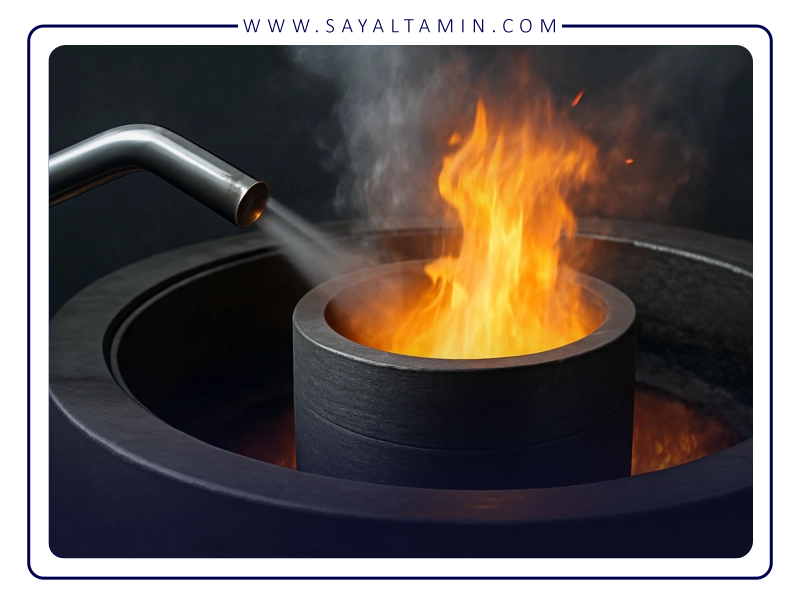
Argon creates an inert environment inside the furnace, preventing the graphite from coming into contact with oxygen in the air and preventing its oxidation. This not only extends the useful life of the heating elements, but also prevents contamination of the materials inside the furnace.
In addition to protecting the graphite, argon also protects the materials inside the furnace from unwanted reactions. In processes such as sintering and sintering, which are carried out at high temperatures, argon prevents the materials from reacting with oxygen and other active gases, ensuring the quality of the final product.
Technical considerations in the use of argon in graphite furnaces
To effectively utilize argon in these furnaces, certain technical requirements must be strictly followed:
1. Gas purity: Argon with a purity of 99.999% is usually used to prevent the presence of impurities such as oxygen and moisture.
2. Flow rate: The gas flow must be sufficient to completely saturate the interior of the furnace with argon. This value depends on the furnace volume, the type of process, and the operating temperature.
3. Gas pressure: The pressure inside the furnace is usually set slightly above atmospheric pressure to prevent the entry of ambient air.
4. Proper sealing: Sealing systems must prevent gas leakage and ensure the stability of internal pressure.
5. Precise control: Precise equipment is essential for continuous monitoring and regulation of temperature, pressure, and argon flow.
6. Workplace safety: Since argon is a suffocating gas (without detectable warning), the presence of a strong ventilation system and leak detectors is mandatory.
| Be sure to read: What is liquid argon and its uses |  |
Economic study of argon use
Using argon in graphite furnaces is economically viable in the long run, despite the initial costs.
Economic benefits include:
• Reduced element replacement costs: As graphite life increases, the need for frequent replacement is reduced.
• Increased production efficiency: Reducing material contamination and stabilizing process conditions reduces waste and improves the quality of the final product.
• Reduced energy consumption: Argon prevents energy loss due to its low thermal conductivity.
• Reduced maintenance costs: Reducing corrosion and damage to internal furnace components reduces maintenance costs.
But the following costs should also be considered:
• Continuous supply of argon gas
• Purchase of gas control and distribution equipment such as regulators and sensors
• The need for periodic inspection and servicing of gas supply systems
Considering the total benefits and costs, the use of argon is fully justified in many advanced industrial applications.
Argon alternatives in certain situations
Although argon is the most common shielding gas in graphite furnaces, alternative gases are sometimes used for economic reasons or specific process conditions:
• Nitrogen (N₂): It is available and cheaper than argon, but at high temperatures it may react with some metals and compounds.
• Helium (He): A light, more inert gas with high thermal conductivity. However, it is very expensive and not suitable for economical use in industrial furnaces.
• Gas mixtures: In some specific applications, a combination of gases such as argon and hydrogen is used to provide specific properties such as further reduction or atomic neutralization.
The selection of the appropriate gas should be based on the type of process, temperature, ambient purity requirements, and costs.
| Read more: Use of Argon in the Steel Industry |  |
Future trends in the use of argon in graphite furnaces
With the growing global demand for advanced materials, nanotechnology, and the production of high-purity parts, the use of argon in graphite furnaces is expected to continue to trend upward.
Some new trends in this field include:
• Development of intelligent control systems to reduce gas consumption
• Optimization of the argon purification and recycling process
• Use of optical sensors to accurately detect gas leaks
• Design of furnaces with better sealing to preserve noble gases
Research into alternative or improved shielding gases may also provide new and more economical options for industries in the future.
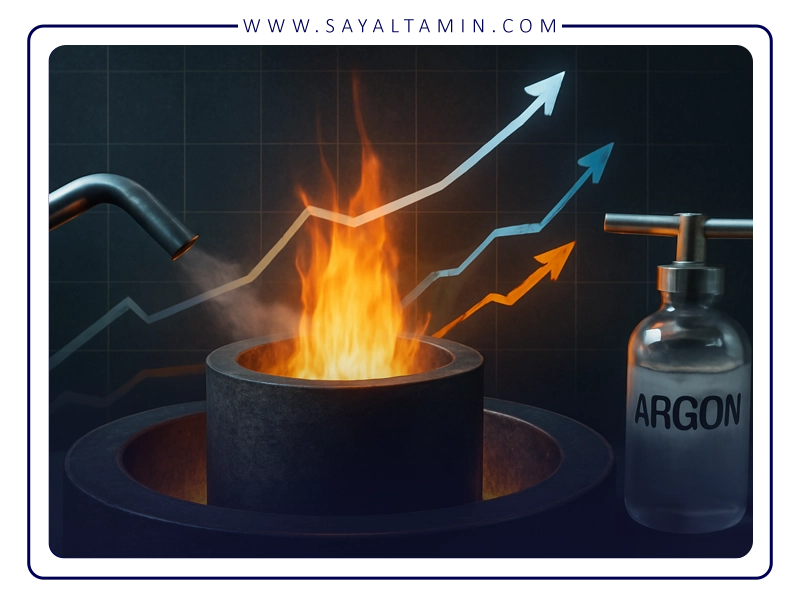
Argon, as a noble, inert and stable gas, plays a key role in optimizing the performance of graphite furnaces. By preventing oxidation and unwanted reactions, this gas extends the life of equipment, enhances product quality and improves energy efficiency. Although the use of argon requires compliance with technical requirements and expenditure, in many industrial applications its benefits will far outweigh its disadvantages.
Given industry trends and technological advancements, argon is expected to continue to maintain its position as a key shielding gas in high-temperature thermal processes, particularly in graphite furnaces.
————————————————–
References